













Author name: Astrovaidya

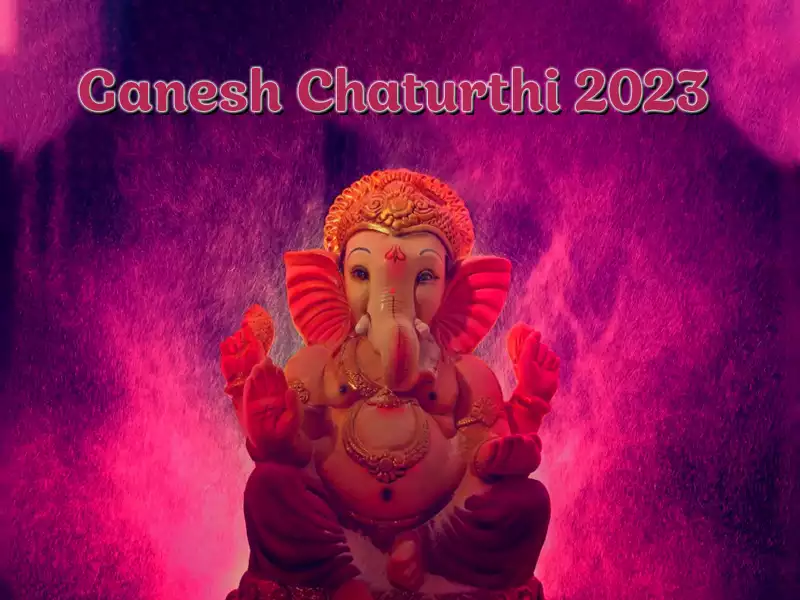
Ganesh Chaturthi 2023

Ganesh Chaturthi 2023

Ganesh Chaturthi 2023

Ganesh Chaturthi 2023

Ganesh Chaturthi, a significant Hindu festival, unfolds annually on the fourth day of the bright fortnight in the Bhadrapada month. According to legend, Lord Ganesha, born during Madhyahan Kaal on a Monday in the Swati Nakshatra with Leo ascendant, bestows this day with immense importance. It is also renowned as Vinayaka Chaturthi, Kalank Chaturthi, and in certain regions, Danda Chauth.

Ganesh Chaturthi Muhurat

  1. The festival is commemorated during the Madhyahan Kaal on the Chaturthi day.
  2. When the festival coincides with a Sunday or Tuesday, it is referred to as Maha Chaturthi, signifying its heightened significance.

Ganesh Chaturthi Vrat & Puja Procedure

  1. For those observing the fast, acquiring an idol of Ganesha made from materials such as gold, copper, or clay is essential. This idol is obtained after completing the morning rituals.
  2. After placing Lord Ganesha over a newly filled Kalash of water, covering its mouth with a fresh cloth, and adorning it with vermillion and Durva grass, offer 21 Laddoos as holy food. Out of these, reserve 5 Laddoos for Lord Ganesha and distribute the rest among Brahmins and those in need.
  3. Evening is the time for worshipping Ganesha. Commence with the recitation of the Ganesh Chaturthi Katha, followed by the Chalisa and Aarti. Offer water to the Moon without direct gazing.
  4. On this occasion, Ganesha’s Siddhi Vinayak form is revered.

Important Notes

  • The Moon should not be seen on this day, as it is believed to bring a curse. In the event of an accidental sighting, the curse can be mitigated by chanting the provided Mantra 28, 54, or 108 times. Alternatively, reciting the 57th Adhyaya of the 10th Skanda of Srimad Bhagwat is believed to lift the curse.

Chandra Darshan Dosha Elimination Mantra:

सिंहःप्रसेनमवधीत् , सिंहो जाम्बवता हतः।
सुकुमारक मा रोदीस्तव, ह्येष स्यमन्तकः।।

  • While performing the Ganesh Puja, avoid using basil leaves, as Ganesha prefers all leaves and flowers except Tulsi (basil).
  • A ritual of circumambulating Ganesha, often done three times, holds significance for some.
Legends of Ganesh Chaturthi

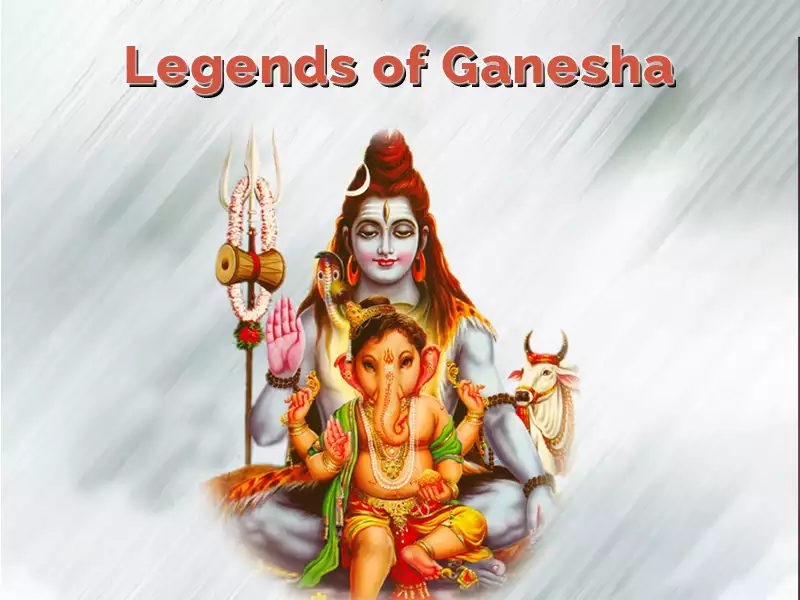
Legends of Ganesha

Numerous ancient legends surround Lord Ganesha, including these notable narratives:

  1. Goddess Parvati, during her bath, created an idol out of lather and bestowed it life. She appointed this creation, Ganesha, as her guardian. Ganesha tried to prevent Lord Shiva’s entry into their abode, resulting in a confrontation leading to Shiva severing his head. In response, Parvati grieved deeply, prompting Shiva to replace Ganesha’s head with that of an elephant, giving him the name “Gajanan.”
  2. Another legend tells of Parvati’s fast dedicated to Lord Krishna to obtain Ganesha, as she had not borne a child since her marriage. Her fast led to Ganesha’s birth, followed by Lord Saturn’s visit, resulting in Ganesha losing his head due to Saturn’s gaze. Vishnu replaced it with an elephant’s head.
  3. As per beliefs, Parashurama visited Kailasha, guarded by Ganesha. Ganesha’s refusal led to a confrontation, during which Parashurama cut one of Ganesha’s teeth, earning him the name “Ekdant.”

Fascinating Facts About Ganesha

  1. Lord Ganesha is worshipped prior to commencing any new endeavor. The phrase “Shri Ganesh” precedes any new venture, reflecting the customary practice. Scriptures universally instruct the worship of Ganesha before initiating any Puja.
  2. Lord Ganesha has been revered since Vedic times, with his Mantras documented in Rig Veda and Yajur Veda.
  3. Ganesha stands among the five main Devtas, along with Shiva, Vishnu, Durga, and Surya, emphasizing his significance.
  4. “Gana” signifies a community or group, while “Isha” represents the Lord. As the leader of Shiva’s followers and Devas, Ganesha is known as Ganesha.
  5. Ganesha’s family includes Shiva as his father, Parvati as his mother, Kartikeya as his brother, and Riddhi-Siddhi as his wives, with Kshema and Labha as his sons.
  6. Ganesha is known by 12 names in the Shastras: Sumukh, Ekdant, Kapil, Gajakarna, Lambodar, Vikat, Vighnanashan, Vinayak, Dhumraketu, Ganadhyakshaya, Bhalchandra, and Gajanana.
  7. Ganesha is credited with transcribing the Mahabharata. When Ved-Vyasa conceived the Mahabharata, Ganesha aided in its composition on Lord Brahma’s recommendation.
  8. In ancient texts, the sacred syllable “ॐ” is equated with Ganesha. His Puja precedes all other worship, enhancing the potency of Mantras.
Ganesh Chaturthi significance

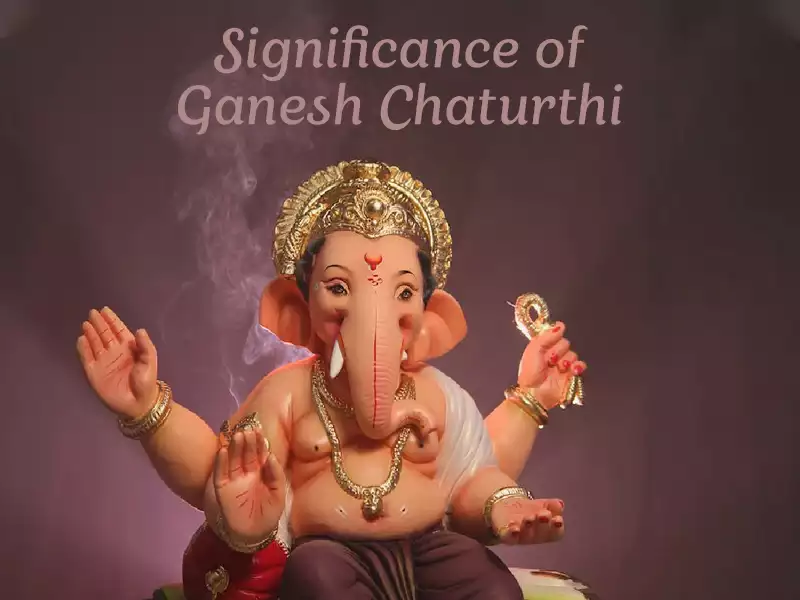
Significance of Ganesh Chaturthi

According to legend, Lord Krishna faced a blame related to the theft of Syamantak Mani. Narada informed him that the unintended sight of the Moon on Bhadrapada Shukla Chaturthi brought about his predicament. Ganesha, on the same day, had cursed the Moon. Following Narada’s counsel, Krishna observed Ganesh Chaturthi (also known as Vinayagar Chaturthi) and absolved himself of the accusations. Thus, Vrat and Puja are believed to have cleansed one of the allegations.

In Indian culture, Ganesha is revered as the bestower of wisdom and knowledge, remover of obstacles, bestower of blessings, provider of protection, Siddhi, prosperity, power, and honor. Although Vainayiki Chaturthi and Sankashti Chaturthi are observed each month during the bright and dark fortnights, respectively, the annual Vinayaka Chavithi holds paramount importance due to Ganesha’s birth. If Ganesh Chaturthi falls on a Tuesday, it is termed Angarak Chaturthi, capable of absolving sins and curses. Similarly, if Sankatahara Chaturthi falls on a Sunday, it is considered propitious.

In Maharashtra, this festival transforms into Ganeshotsava (Ganesh Festival), spanning ten days and culminating on Anant Chaturdashi (Ganpati Visarjan). During this period, Ganesha

is adorned and worshipped, and on the final day, his immersion into water is celebrated with grandeur.

For these reasons, Ganesh Chaturthi is regarded as a spiritually enriching festival that bestows significant blessings. With this brief overview, we extend our wishes for abundant blessings from Lord Ganesha on this auspicious occasion of Vinayagar Chaturthi.

Ganesh Chaturthi 2023 Read More »
Hartalika Teej 2023

Hartalika Teej 2023

Hartalika Teej 2023

Hartalika Teej 2023

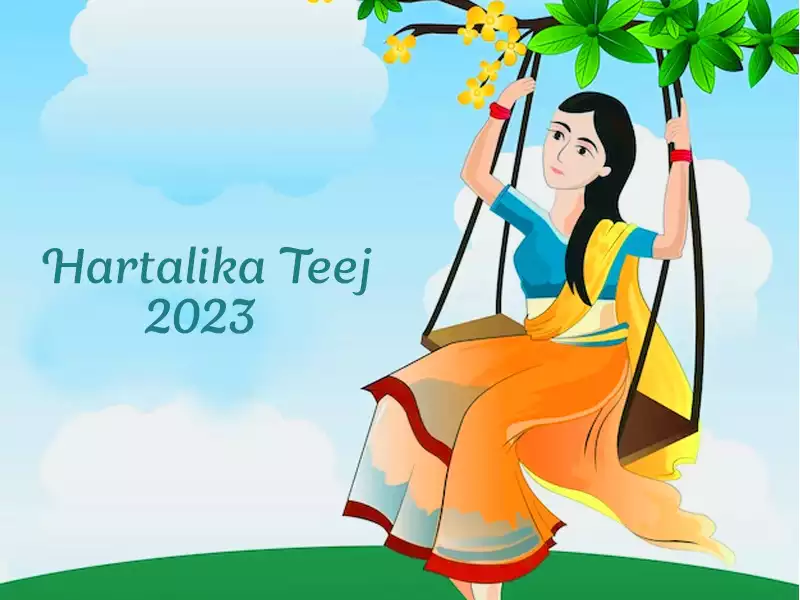
Hartalika Teej Vrat stands as a prominent observance within Hinduism. Celebrated on the third day of the Shukla Paksha in the Bhadrapada month, Hartalika Teej is rooted in the veneration of Lord Shiva and Goddess Parvati, particularly during the auspicious Hast Nakshatra of that day. This significant occasion is honored by unmarried girls, married women, and even widows, with abstinence from both grains and water. It is believed that Goddess Parvati herself initiated this Vrat to attain Lord Shiva as her husband. Observing the Hartalika Teej Vrat is believed to bestow marital harmony and joy upon women.

Guidelines for Hartalika Teej Vrat

  • Refrain from drinking water during the Hartalika Teej Vrat. Water consumption is allowed only on the subsequent day after the Vrat.
  • Once the decision to observe the Hartalika Teej Vrat is made, it should be followed through with proper rituals and observance.
  • On the day of Hartalika Teej Vrat, stay awake during the night, engaging in group singing of religious hymns.
  • This Vrat is open to unmarried girls, married women, and even widows, in accordance with the scriptures.

teej

Hartalika Teej Vrat Puja Procedure

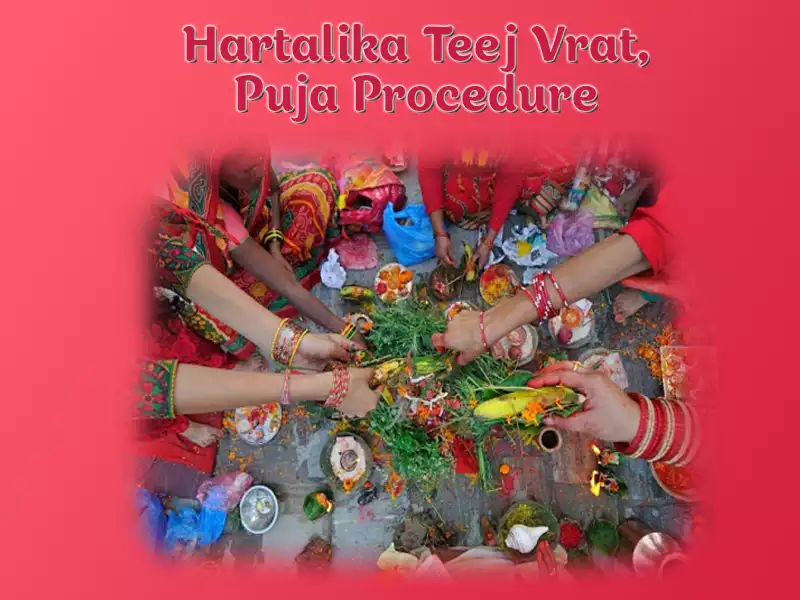
On the sacred occasion of Hartalika Teej Vrat, reverence and worship are offered to Lord Shiva and Goddess Parvati. The steps of the Puja are as follows:

  • Perform the Hartalika Teej Vrat during the Pradosh Kaal, the three Muhurats after sunset, which marks the moment of twilight between day and night.
  • Craft idols of Lord Shiva, Goddess Parvati, and Lord Ganesha using sand and black soil.
  • Decorate the worship space with flowers and set up an altar. Place banana leaves on the altar before positioning the idols of Lord Shiva, Goddess Parvati, and Lord Ganesha.
  • Commence the Shodashopchar Puja by inviting all deities and performing the ritual for Lord Shiva, Goddess Parvati, and Lord Ganesha.
  • A significant tradition involves offering auspicious symbols of married women in a sacred enclosure to Goddess Durga.
  • Within the Puja, traditional men’s attire (dhoti and angocha) is presented to Lord Shiva. After receiving blessings from the mother-in-law, these symbols of marriage are donated to Brahmins.
  • Following the Puja, partake in the recitation of sacred stories and engage in vigils throughout the night. Conclude the fast the following morning with an aarti, offering vermilion and cucumber sweets to Goddess Parvati.
significance of Hartalika Teej

Spiritual Significance of Hartalika Teej

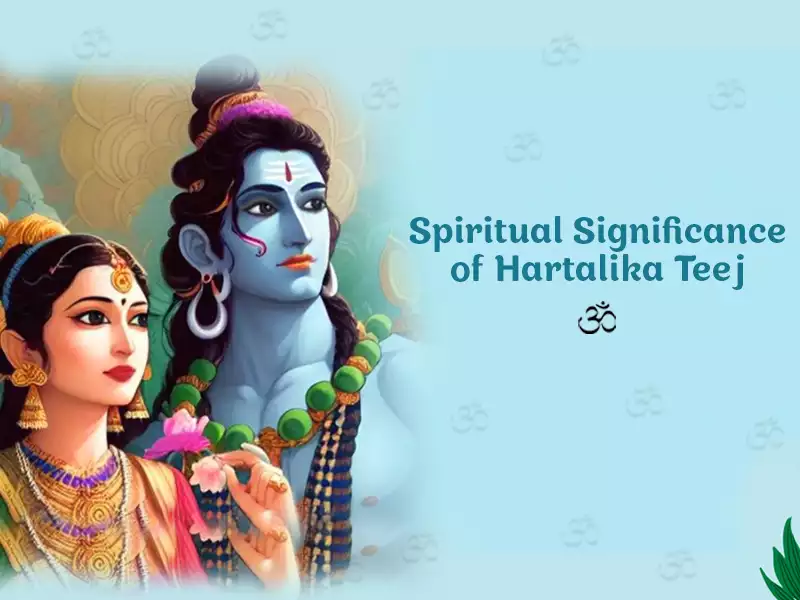
Hartalika Teej festival is dedicated to the union of Lord Shiva and Goddess Parvati. A spiritual narrative recounts how Goddess Parvati, yearning for Lord Shiva as her spouse, embarked on an intense austerity along the banks of the Ganga in the Himalayas. Moved by her dedication, Maharishi Narad, on behalf of Lord Vishnu, proposed a marriage alliance. Upon learning of this proposal, Goddess Parvati mourned her situation and confided in her female companion. She revealed her intent to attain Lord Shiva through her austerity. Following her companion’s advice, Goddess Parvati retreated to the forest, immersing herself in devotion to Lord Shiva. It was during the Hast Nakshatra the third day of the Shukla Paksha in the Bhadrapada month that she decorated a Shivalinga from sand and ardently worshipped Lord Shiva. Witnessing her unwavering devotion, Lord Shiva manifested before her, accepting her as his consort.

Henceforth, Hartalika Teej Vrat has been practiced by unmarried girls and married women, seeking a desirable husband and the well-being of their spouse, respectively. Through this Vrat, devotees also seek the blessings of Lord Shiva and Goddess Parvati through their worship.

In closing, we extend warm wishes to all readers on the auspicious occasion of Hartalika Teej Vrat. May the blessings of Lord Shiva and Goddess Parvati shower upon you abundantly.

Hartalika Teej 2023 Read More »

Raksha Bandhan

Raksha Bandhan 2023

Raksha Bandhan

Raksha Bandhan 2023

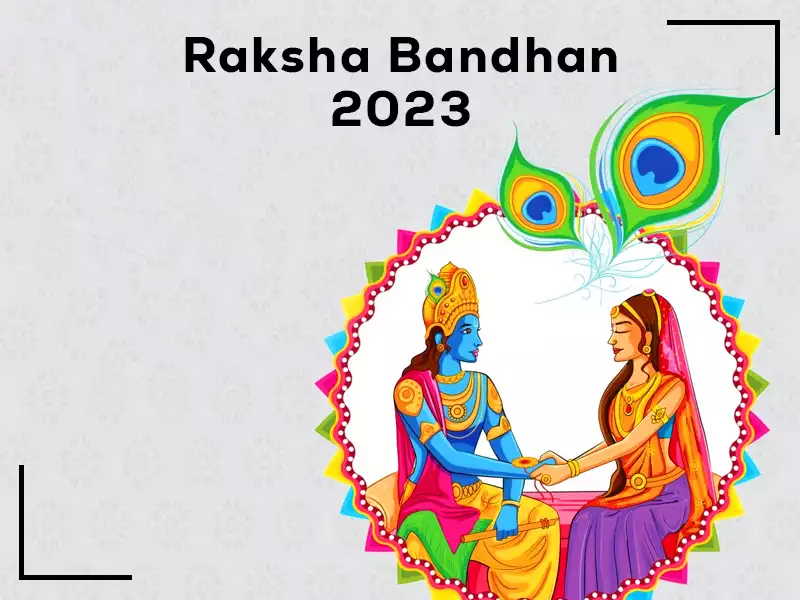
Raksha Bandhan, also known as Rakhi Purnima, is observed annually on the full moon day of the Shravan month, sometimes referred to as Sawan. This day holds immense significance as it honors the bond between siblings, particularly that of brothers and sisters. Sisters tie a sacred thread called Rakhi on their brother’s wrists, symbolizing well-wishing and protection, while brothers pledge to safeguard their sisters. In certain regions, this day is known as Rakhri. It ranks among the major festivals in India.

The Auspicious Timing of Raksha Bandhan

Raksha Bandhan aligns with the Purnima (full moon) day of the Hindu month Shravan during the Aparahan Kaal period. However, specific guidelines apply:

  1. If Bhadra falls within the Aparahan Kaal on Purnima, Raksha Bandhan rituals should not occur during this time. In such instances, if the following day has Purnima prevailing within the first 3 Muhurats of the day, the rituals can take place during the Aparahan Kaal of the second day. This is because Sakalyapadit Purnima will be present at that time.
  2. If Purnima doesn’t occur within the first 3 Muhurats of the subsequent day, Sakalyapadit Purnima will also be absent. In such cases, Rakshabandhan can be celebrated on the first day following Bhadra during the latter half of Pradosh.

In places like Punjab, Aparahan Kaal isn’t given significant consideration, and Raksha Bandhan is celebrated before Madhyahn, often during the early morning. Nevertheless, our scriptures strictly prohibit Raksha Bandhan observances during Bhadra, irrespective of the situation. During Grahan Sutak (solar eclipse) and Sankranti (Sun’s transit), the festival can be celebrated without restrictions.

To infuse the spirit of Raksha Bandhan, explore these wallpapers: Raksha Bandhan Wallpapers

Celebrating Rakhi

Celebrating Rakhi Poornima

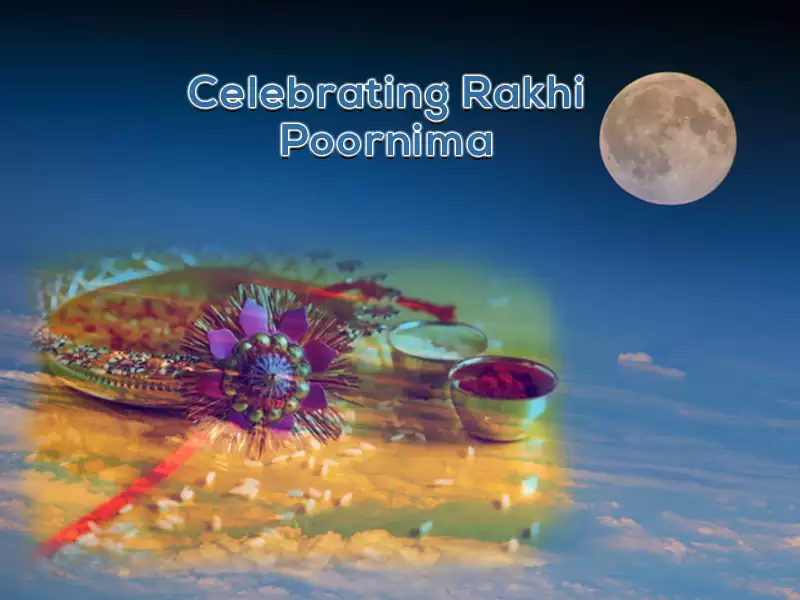
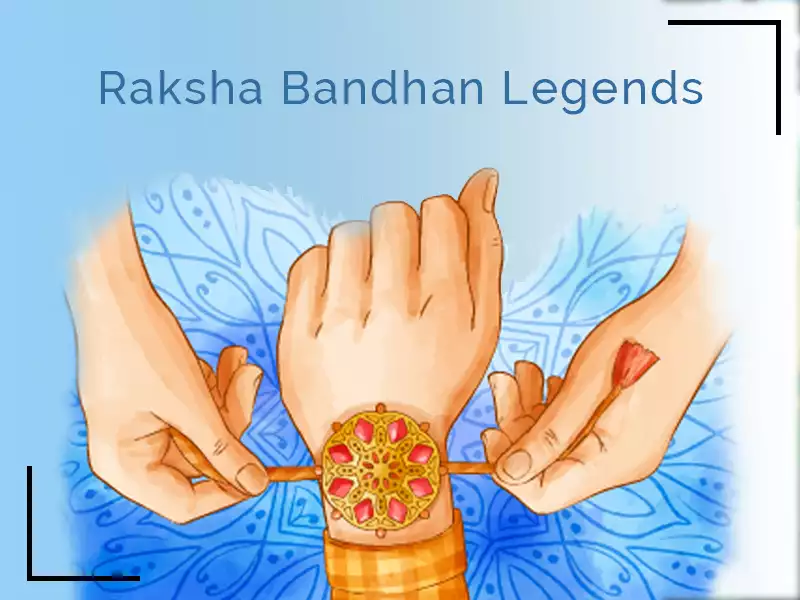
During the Raksha Bandhan festival, sisters tie Rakhi threads onto their brothers’ wrists, wishing them a life filled with prosperity and happiness.

A small packet (Potli) containing Akshat (Rice), yellow mustard seeds, and golden wire should be tied to the right hand of brothers by their sisters. Similarly, Brahmins may do the same for their patrons. While performing this, the following mantra should be recited:

ॐ येन बद्धो बली राजा दानवेन्द्रो महाबलः।
तेन त्वामपि बध्नामि रक्षे मा चल मा चल।।

The Potli can be ceremoniously placed on a Kalash (container) in a clean corner of the house before being tied to the hand.

Once, Yudhishthir asked Lord Krishna for a story capable of alleviating human suffering. Krishna shared this narrative:

In ancient times, Devas (Gods) and Asuras (Demons) engaged in a 12-year battle. The Asuras were prevailing, and their King claimed dominion over all three realms. Tormented, Deva’s King Indra sought Guru Brihaspati’s counsel for protection. On Shravana Purnima, the Raksha Vidhan (protection ceremony) was performed.

Guru Brihaspati recited the aforementioned mantra during the Raksha Vidhan. Indra and his wife followed suit with Guru Brihaspati. Indrani, Indra’s consort, validated the Raksha Sutra with the Brahmins and Purohits and then fastened it to Indra’s right hand. This Sutra enabled Lord Indra to overcome the Asuras.

Another distinctive tradition involves women adorning their home walls with gold early in the morning. This gold is worshipped with offerings like vermicelli dessert (Sevaiyan), sweet rice porridge (Kheer), and sweets. Rakhi threads are affixed to the gold using these offerings. Those who sow wheat on Nag Panchami place these saplings in this ritual, and after tying Rakhi on their brother’s wrists, they place these plants behind their ears.

Some individuals observe a fast the day before Raksha Bandhan, following Vedic rituals on the day itself. Pitru Tarpan (homage to ancestors), Rishi Pujan (tribute to sages), and Shravan Pujan (veneration of Lord Shiva) are performed.

Gift exchange is a common practice, with brothers giving presents to sisters. If one doesn’t have a biological sister, Raksha Bandhan 2023 can be celebrated with cousins or individuals who share a sisterly bond.

Raksha Bandhan legends

Raksha Bandhan Legends

Several legends, as discussed earlier, are detailed to elucidate specific Puja practices. Additional legends include:

  1. Krishna and Draupadi: Draupadi once used a piece of her saree to bandage Krishna’s injured hand. In gratitude, he pledged to protect her. Krishna came to Draupadi’s aid during her harrowing ordeal in the Kaurava court.
  2. Karmavati and Humayun: Queen Karmavati of Chittor sent a Rakhi to Mughal Emperor Humayun, seeking his assistance. Humayun respected the Rakhi and sent forces to safeguard his sister’s honor against the Gujarat Emperor.

These legends, woven into the fabric of Raksha Bandhan, celebrate the bond of love, protection, and camaraderie between siblings.

Raksha Bandhan 2023 Read More »

Onam

Onam – Festival of Kerala

Onam

Onam - Festival of Kerala

Onam is a 10-day festival celebrated by the people of Kerala. The most significant day of this festival is the tenth day, known as Thiruvonam. This day is often used interchangeably with the term “Onam” itself. In the Malayalam language, the Shravan Nakshatra is referred to as Thiru Onam and the Thiru Onam Puja takes place during this time, coinciding with the Shravana/Thiruvonam Nakshatra in the Chingam month according to the Malayalam Calendar.

Insight into Thiruvonam

Thiruvonam comprises two parts: ‘Thiru’ and ‘Onam‘. ‘Thiru’ denotes something holy, akin to the Sanskrit term ‘Shree’. It is believed that on this day, King Maha Bali returns from the netherworld (Patala Loka) to visit his people. Various other beliefs are attached to this festival, including the birth of Vishnu’s Vamana Avatar.

In Kerala, a 4-day holiday period is observed during Onam. This span encompasses the day before Thiruvonam and extends for two days afterward. These four days are named First Onam, Second Onam, Third Onam, and Fourth Onam. Second Onam holds the status of being the principal Thiruvonam day.

Thiruvonam features

Thiruvonam Festivities

  1. Since Thiruvonam ranks among Kerala’s most crucial festivals, the celebrations are grand in scale. The festivities kick off ten days ahead of Thiru Onam, commencing with Atham, the first day of the Onam festival.
  2. On the subsequent day, Chithira, individuals embark on house cleaning and decoration in preparation for the tenth day, Thiruvonam.
  3. On The eighth day, Pooradam, sees final shopping endeavors in readiness for the impending Thiruvonam extravaganza.
  4. The ninth day, Uthradom, involves last-minute shopping for fresh produce like fruits and vegetables. In the evening, preparations such as cutting vegetables are undertaken.
  5. On the morning of the tenth day, people rise early, bathe, don new attire, and extend charitable donations to the less fortunate. In many households, the eldest family member acquires clothing for all.
  6. Thiruvonam Puja and rituals are essential during the Thiruvonam/Shravan Nakshatra phase.
  7. Women clean and adorn the house, creating intricate flower carpets especially outside the main entrance to welcome King Bali’s spirit. In some households, rice paste designs embellish the entrance.
  8. An elaborate feast known as Onam Sadhya is prepared to invoke the blessings of the King. Onam Sadya is a highlight of the festival, featuring around 26 dishes served on banana leaves. The menu includes chips, buttermilk, sweets, lentils, pickles, and more.
  9. The evening is marked by diverse games and cultural performances, illuminating the atmosphere with lamps and lights after sunset.

The Historical Underpinning of Onam

According to legend, King Mahabali reigned with immense power, ruling over Bhu Loka (Earth), Deva Loka (Heaven), and Patala Loka (Nether World). Despite his demon lineage, he exhibited extraordinary benevolence, earning the affection of his subjects. However, his ascendancy riled the Devas (celestial beings), who enlisted Lord Vishnu’s aid to reclaim their domain. Vishnu assumed the Vamana Avatar, appearing as a diminutive Brahmin. Bali, adhering to the practice of honoring Brahmins, offered the Lord three paces of land. Vishnu magnified himself, placing one foot in heaven, the other on earth, and with the third step, confined Bali to the netherworld. Impressed by Bali’s magnanimity, Vishnu granted him an annual visit to his realm. Thus, Thiruvonam marks Bali’s yearly return.

Onam soiree

A 10-Day Onam Soiree in Kerala

  1. Atham: Commences with temple worship, featuring steamed bananas and fried papad for breakfast. Pookalam (flower carpets) are crafted.
  2. Chithira: Worship followed by adding new flowers to the Pookkalam and flower procurement.
  3. Chodhi: Markets gear up for shopping, and people collect items for Thiruvonam preparation.
  4. Visakam: Flower carpet competition and preparation of pickles and chips.
  5. Anizham: Highlights the Vallamkali snake boat race.
  6. Thriketa: Cultural events and visits to enhance the festive spirit.
  7. Moolam: Markets brim with food offerings, and people indulge in various dishes.
  8. Pooradam: Clay pyramids (“Maa”) with flower offerings, preparation intensifies.
  9. Uthiradam: Also First Onam, preparations escalate, and large Pookkalams take shape.
  10. Thiruvonam: King Bali’s arrival day, marked by grand flower carpets, the elaborate Onam Sadhya, cultural events, and fireworks. Onam extends for two more days post-Thiruvonam, culminating in the 12-day celebration. The 10 days before Thiruvonam hold prime significance.
  11. Avittom: Third Onam, the prelude to King’s return. Onathappan statue immersion, Pookalam removal, and Tiger dance (Pulikali) are observed.
  12. Chathayam: Culmination with a grand dance festival.

This comprehensive insight into Onam and Thiruvonam will enhance your celebratory experience.

Onam – Festival of Kerala Read More »

Kajari Teej

Kajari Teej 2023

Kajari Teej

Kajari Teej 2023

Kajari Teej, alternatively referred to as Kajali Teej, is celebrated on the third day of the Krishna Paksha (dark fortnight) during the lunar month of Bhadrapada. In the Gregorian calendar, this falls in July or August. This festival predominantly revolves around women and finds its observance in regions such as Uttar Pradesh, Madhya Pradesh, Rajasthan, and across the nation. Variably known as Boodhi Teej and Satudi Teej, it carries significant relevance for married women, much like Hariyali Teej and Hartalika Teej. The fasting ritual of Kajari Teej is believed to usher happiness and harmony into married lives.

Traditions of Kajari Teej

Kajari Teej is celebrated with exuberance by women, each region adding its own flavor while adhering to the core customs. The following are the basic rituals associated with Kajari Teej:

  1. Married women observe a fast on this day for their husbands’ longevity, while unmarried girls fast to seek a blessed marital union.
  2. Various dishes, often using a mixture of barley, wheat, gram, and rice (sattu), are prepared for the day. The fast concludes when the moon becomes visible.
  3. Cows are revered during Kajari Teej, where small wheat flour chapatis, coated with jaggery and ghee, are offered and then consumed after being fed to the sacred cows.
  4. Homes are adorned with beautiful swings, and women revel in dancing to folk songs.
  5. A notable feature of the day is the singing of Kajari Teej songs. In regions like Uttar Pradesh and Bihar, people sing Kajari songs accompanied by drum beats.
Kajari Teej Poja Procedure

Kajari Teej Puja Procedure

Goddess Neemdi, also known as Neemdi Mata, holds significance in this sacred festival. Devotees venerate Goddess Neemdi with devotion during Kajari Teej. The puja begins with the creation of a pond-like structure using a wall as a support. The outer borders of this structure are fortified and adorned with pure ghee and jaggery, and a Neem twig is planted nearby. Raw milk and water are poured into the pond, and a lamp (diya) is lit and positioned close by. The puja thali (plate) is embellished with items like lemon, cucumber, bananas, apples, sattu (gram flour), vermilion, sacred thread, and rice. Raw milk is placed in a vessel, and the evening worship of Goddess Neemdi is performed according to the prescribed rituals:

1. Water and vermilion (sindoor) are sprinkled over Goddess Neemdi, followed by rice offerings.
2. A henna paste is used to create 13 dots on the wall behind the Goddess – henna and vermilion dots with the little finger, and kohl dots with the ring finger.
3. Goddess Neemdi is adorned with a sacred thread, henna, kohl, and clothes, following which the wall is embellished with the sacred thread using the marked dots.
4. Fruits or other offerings are presented to Goddess Neemdi. A vermilion tilak is applied to the sacred vessel (Puja Kalash), and the sacred thread is tied around it.
5. In the glow of the nearby lamp (diya), one gazes at the lemon, cucumber, Neem twig, nosepin, etc. Following this, Arghya (water offering) is presented to the Moon God.

Moon god

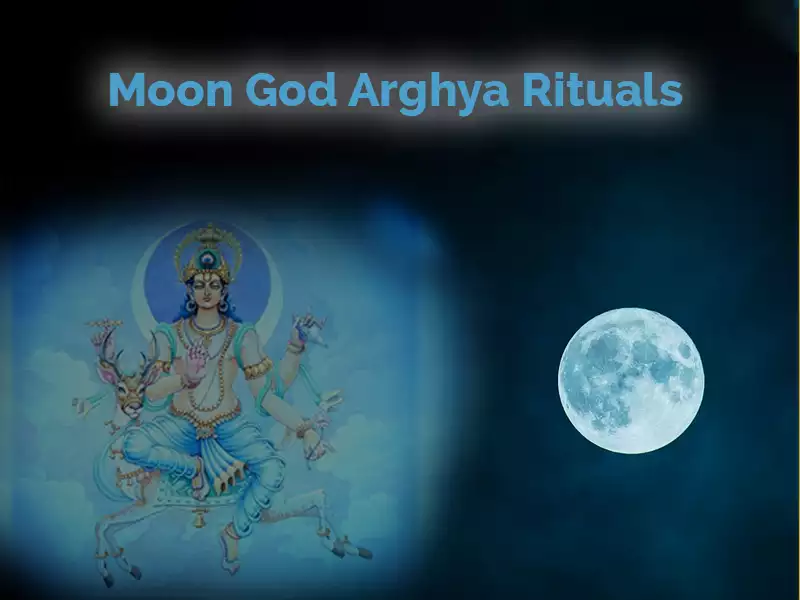
Moon God Arghya Rituals

After worshipping Goddess Neemdi in the evening, the Arghya (a mixture of water and milk) is offered to the Moon God as part of the Kajari Teej observance.

  1. After sprinkling water, vermilion, sacred thread, and rice are offered, along with food offerings, to the Moon God.
  2. Holding a silver ring and wheat grains, the Arghya is offered while rotating four times clockwise (Pradakshina) without moving from the spot.

Kajari Teej Vrat Practices:

  1. The fast observers generally refrain from consuming water during the fast (Nirjala), although pregnant women are allowed to consume fruits.
  2. If, for any reason, the moon isn’t visible, the fast must be broken by looking at the sky at 11:30 P.M. and consuming food.
  3. After the Udyaapan (ending a fast) rituals, if a strict Nirjala fast isn’t possible, fruits can be consumed during the fast.

By adhering to these practices with unwavering devotion, the Kajari Teej 2023 fast is believed to bestow enduring marital happiness upon the observers.

Kajari Teej 2023 Read More »

Janmashtami 2023

Janmashtami 2023

Janmashtami 2023

Janmashtami 2023

Janmashtami marks the celebration of Lord Krishna’s birth. In the city of Mathura, where the demon King Kansa ruled, Lord Krishna was born as Devaki’s eighth child in the confines of Kansa’s prison. This event occurred on the eighth day of the dark fortnight of the Bhadrapada month. Notably, Lord Krishna’s birth took place at midnight when the Moon ascended alongside the Rohini Nakshatra. Hence, Janmashtami, also known as Krishnashtami, is commemorated annually to honor Lord Krishna’s birthday.

Krishna Janmashtami Timing

  1. If Ashtami (eighth day) extends into midnight, the fast is observed on the following day.
  2. If Ashtami falls solely within the midnight of the second day, the fast is observed on that second day.
  3. If Ashtami spans two midnights and Rohini Nakshatra is present only during one night, the fast is kept on the day following that night.
  4. If Ashtami spans two midnights and both nights have Rohini Nakshatra, Krishna Janmashtami is observed on the second day.
  5. If Ashtami spans two midnights without Rohini Nakshatra on either day, Krishna Jayanthi fast is observed on the second day.
  6. If Ashtami doesn’t span midnight on either of these days, the fast is observed on the second day.

Note: The above timings are based on the practices of Smarthas. Vaishnavas, however, celebrate Gokulashtami on the second day. These two communities have varying beliefs about the festival’s observance.

As per Hindu religious texts, Vaishnavas are individuals initiated into the Vaishnava community, recognized by their use of holy beads and a Tilak on their forehead, symbolizing Vishnu’s feet. Others, not initiated by the Vaishnava community, are referred to as Smarthas.

Janmashtami Fast & Puja Procedure

  1. The celebration initiates with the fast and Puja on Ashtami, culminating with Parana on Navami.
  2. Observers of the fast should consume light Sattvic food on Saptami, the day before. Physical intimacy with one’s partner is to be avoided on the subsequent night, keeping the senses restrained.
  3. On the fasting day, rise early and pay homage to deities, facing East or North.
  4. Make a pledge for the fast while holding holy water, fruit, and flowers.
  5. Sprinkle water mixed with black sesame over yourself and create a birthing chamber for Devaki Ji.
  6. Set up a crib in this room, along with a sacred Kalash.
  7. Place an idol or image of Devaki Ji nursing Krishna.
  8. Perform the Puja, invoking the names of Devaki, Vasudeva, Baladeva, Nand, Yashoda, and Lakshmi Ji.
  9. The fast is broken only after midnight. Grains are abstained from, and fruits or items like fried Kuttu flour balls, condensed milk sweets, and water chestnut Halwa are consumed.

Janmashtami Legend

During the conclusion of Dwapara Yuga, King Ugrasen ruled Mathura, with his son Kansa. Kansa, driven by the prophecy that Devaki’s eighth child would be the cause of his death, imprisoned Devaki after her marriage to Vasudeva. Despite Vasudeva’s promise to hand over their eighth child, Kansa ruthlessly killed her first seven children. Lord Krishna was born in the Bhadrapada month on the eighth day of the dark fortnight, under the Rohini constellation. His divine birth illuminated the prison, and he instructed Vasudeva to transport him to Gokul and bring back a newborn girl. The baby girl, presented to Kansa, transformed into a Goddess, foretelling Kansa’s defeat at Krishna’s hands.

Janmashtami's Significance

  1. Temples across the nation are adorned for this occasion.
  2. Elaborate tableaus illustrating Krishna’s life are displayed.
  3. Krishna is adorned and placed in a cradle, swung with joy.

Devotees fast until midnight, announcing Krishna’s birth with the resonant sound of conches and bells. Aarti is performed, and holy meals are distributed.

With this insightful portrayal, we hope that on this auspicious occasion, Lord Krishna’s blessings shower you with boundless joy and prosperity.

Janmashtami 2023 Read More »

Bollywood Celebrities who changed their names

Bollywood Celebrities Who Changed Their Names as per Astrology and Got Fame

Bollywood Celebrities who changed their names

Bollywood Celebrities Who Changed Their Names as per Astrology and Got Fame

AstroVaidya has chosen a captivating theme that is sure to captivate readers’ interest. In this blog post, we delve into the fascinating realm of Bollywood, exploring renowned figures who attained fame and prosperity by heeding astrological advice and altering their names. Furthermore, you will gain insights into these Bollywood luminaries, delving into details such as their birthdates and corresponding zodiac signs.

Famous Bollywood stars are popular for their unwavering dedication and relentless pursuit of opportunities. Over time, it has become widely acknowledged that numerous prominent individuals have opted to transform their given names into more recognizable stage appellations. However, even these luminaries remain attuned to superstitions and the potential impact of ill fortune. Throughout the years, several notable figures in the industry have undergone astrological name alterations in a bid to amplify their fortunes in matters such as love, business, and various facets of life. Below, we delve into a glimpse of a few such instances.

Talk to the best Astrologer Right Now!

Bollywood Celebrities with changed names

Bollywood Celebrities Who Have Changed Their Names

Amitabh Bachchan’s Transformation from Amitabh Srivastava: Among the esteemed Bollywood actors, the iconic Amitabh Bachchan was originally named Amitabh Srivastava. Regrettably, his debut film “Saat Hindustani” faced monumental failure. Subsequently, he heeded astrologers’ advice and embraced the surname “Bachchan,” etching his indelible mark on cinematic history.

Born: October 11th, 1942

Zodiac Sign: Libra

Dilip Kumar’s Transition from Yusuf Khan: Yusuf Khan, acclaimed as the tragedy king Dilip Kumar, gained prominence through films like “Devdas,” “Naya Daur,” and “Mughal-e-Azam” after adopting the alias.

Born: December 11th, 1922

Zodiac Sign: Sagittarius

Johnny Lever’s Evolution from John Prakash Rao: Noted as one of Bollywood’s finest comedians, Johnny Lever was initially recognized as John Prakash Rao. His name transformation showcased his prowess in stand-up comedy and mimicry, solidifying his iconic reputation.

Born: August 14th, 1957

Zodiac Sign: Leo

Suniel Shetty’s Alteration from Sunil Shetty: A prominent actor renowned for his fitness goals, Suniel Shetty, returned after a hiatus with resounding success. Notably associated with action-packed roles, Suniel altered his name according to astrological guidance by adding an “e.”

Born: August 11th, 1961

Zodiac Sign: Leo

Rani Mukerji’s Transition from Rani Mukherjee: A stalwart in Bollywood, Rani Mukerji underwent a name evolution as her career blossomed. Shifting from Rani Mukherji to Rani Mukerji, the change resonated with astrological significance.

Born: March 21st, 1978

Zodiac Sign: Aries

Karisma Kapoor’s Shift from Karishma Kapoor: Similar to Rani Mukerji, Karisma Kapoor modified her name by shedding a letter, in contrast to others who added letters. Transitioning from Karishma Kapoor to Karisma Kapoor, the change paralleled her ascending career.

Born: June 25th, 1975

Zodiac Sign: Cancer

Javed Jaffery’s Name Transition from Javed Jaafery: Javed Jaffrey’s name change involved altering the sequence of letters, reflecting astrological influence. From Javed Jaafery to Javed Jaffrey, the alteration embodied celestial guidance.

Born: December 4th, 1963

Zodiac Sign: Sagittarius

Rajkummar Rao’s Change from Rajkumar Yadav: In alignment with astrology, Rajkummar Rao experienced transformation. Changing from Rajkumar Yadav to Rajkummar Rao by omitting his last name, the alteration coincided with his meteoric rise.

Born: August 31st, 1984

Zodiac Sign: Virgo

Ayushmann Khurrana’s Shift from Ayushman Khurana: Ayushmann Khurrana embarked on a name change journey driven by auspiciousness. Adding “m” and “r” to his name, Ayushmann’s transformation propelled his career to extraordinary heights.

Born: September 14th, 1984

Zodiac Sign: Virgo

Bollywood Celebrities Who Changed Their Names as per Astrology and Got Fame Read More »

Rahu Srivastav

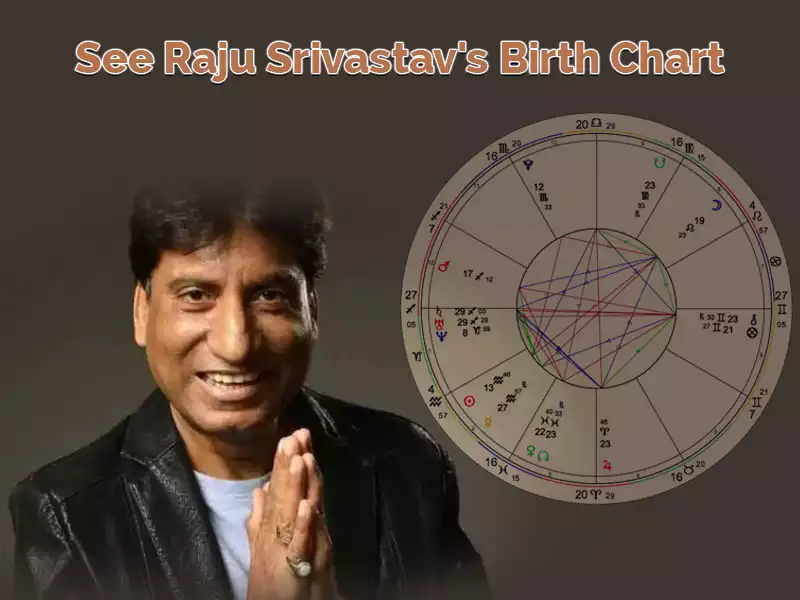
See Raju Srivastav’s Birth Chart

Rahu Srivastav

See Raju Srivastav’s Birth Chart

The day commenced with somber news as the renowned stand-up comedian Raju Srivastav breathed his last at 58 years of age. On August 10, during his gym session, he suffered an unexpected heart attack, leading to unconsciousness. Subsequently, he was rushed to AIIMS Hospital in Delhi by his family, where his critical condition prompted an immediate transfer to the ICU and connection to a ventilator.

Despite strenuous efforts spanning 40 days, his health deteriorated persistently following the heart attack. Medical reports revealed a drastic reduction in brain oxygen levels post-attack, resulting in a 40-day coma. Unfortunately, today, on September 21, at 10:20 a.m., doctors officially declared his passing.

Talk to the best Astrologer in India

Best Comedian Raju Srivastav

His impeccable comic timing has garnered fans worldwide. Let’s delve into the unique Yogas that propelled his success in the comedy realm. Additionally, we’ll explore how the current celestial alignments took a toll on his health. Uncover the secret behind Raju Srivastav’s fame through his birth chart.

In a heartfelt tweet, Dr. Kumar Vishwas expressed, “Raju Bhai bid farewell to his earthly journey, battling the shadows of God’s realm. Countless memories, from his struggle days to the pinnacle of fame, are now resurfacing.”

Born on December 25, 1963, Satya Prakash Srivastav adopted the stage name Raju. His dynamic acting and comedic prowess brought fictional characters to life, notably the beloved Gajodhar Bhaiya. Fans embraced Raju Srivastava in this persona, showering him with affection.

Hailing from a middle-class family in Kanpur, Raju harbored dreams of becoming a comedian. His voyage into stand-up comedy commenced with the talent showcase, The Great Indian Laughter Challenge.

A versatile talent, Raju Srivastav has graced numerous stage performances both in India and abroad. His presence is also felt in Bollywood, with appearances in Rajshri Productions’ films like Maine Pyar Kiya, Baazigar, and Bombay to Goa. Raju also left his mark on television, participating in Bigg Boss Season 3 and Nach Baliye Season 6. Notably, he made memorable appearances on Kapil Sharma’s hit show, Comedy Nights with Kapil.

See Raju Srivastav’s Birth Chart Read More »

Auspicious yoga formed on Adhik Maas

Auspicious Yoga Formed on Adhik Maas Amavasya After 19 Years: Discover the Fortunate Zodiac Signs

Auspicious yoga formed on Adhik Maas

Auspicious Yoga Formed on Adhik Maas Amavasya After 19 Years: Discover the Fortunate Zodiac Signs

Adhik Maas Amavasya 2023: Adhik Maas holds a unique significance in Hindu tradition, where adhering to proper rituals can yield fruitful outcomes in the lives of individuals. Devotees seek the blessings of Lord Vishnu and partake in religious observances during this period. The rare convergence of Adhik Maas with Shravan Maas intensifies devotion to Lord Shiva and Lord Vishnu. Moreover, the occurrence of Adhik Maas Amavasya forms an auspicious yoga, an event that transpires once in 19 years. This Adhikamasya Tithi coincides with the Shravan month, and its occurrence after a span of three years is set to reshape the fortunes of select zodiac signs. Detailed insights are provided in a special AstroVaidya blog.

Adhik Maas Amavasya 2023: Exact Date & Time

On August 16, 2023, the Adhik Maas Amavasya will grace us, providing a propitious opportunity for offering prayers to Lord Shiva and Vishnu. Spanning from July 18, 2023, to August 16, 2023, the duration of Adhik Maas is characterized by its significance. This period serves as an opportune time for engaging in rituals such as Shradh and Tarpan in alignment with Vedic Astrology. Initiating the day with an early morning bath and extending donations to those in need can yield favorable results in various aspects of life. Furthermore, this once-in-19-years occurrence holds auspicious promises for select zodiac signs, and it’s time to delve into the specifics.

Adhik Maas

The Adhik Maas Amavasya: A Blessing for These 4 Zodiac Signs

  1. Taurus: For individuals born under the Taurus sign, this period marks an auspicious time to wrap up pending tasks as anticipated. Success is highly likely, bringing significant recognition within society. Financial stability prevails, allowing for efficient expense management. A joyful atmosphere envelops the entire family, fostering harmonious relationships and tranquility. Engage in diverse activities, as prosperity fills the household. Chart a course of action that guarantees comprehensive well-being.
  2. Virgo: Virgo natives shall reap monetary gains through strategic financial planning. Success is within reach, propelling business endeavors with new lucrative ventures. Recognition flourishes in the professional sphere, prompting beneficial adjustments to work routines. Affection for life partners deepens, presenting opportunities for shared vacations. Quality time with family fosters peaceful interactions, reducing misunderstandings.
  3. Libra: Libra individuals welcome a period of long-awaited favorable circumstances. Embrace happiness throughout this phase, striving diligently for desired accomplishments. Promotions and increments are probable, while ancestral blessings enhance overall prosperity. Wise investments yield business returns, enabling the fulfillment of future plans. Timely project completion contributes to marital contentment.
  4. Scorpio: Scorpio natives embrace a rewarding phase of monetary gains and professional advancement. Past undertakings resume, nurturing quality family moments. This window welcomes potential marriage proposals and offers an optimal juncture for career development. Opportunities for travel materialize, enabling enjoyable family vacations. Enhanced trust between partners fosters positive outcomes.

Frequently Asked Questions

Q1. How advantageous is Adhik Maas?
Ans. Observing fasting on designated days of the month can yield favorable outcomes in life.

Q2. Is purchasing new items during Adhik Maas advisable?
Ans. It’s advisable to refrain from acquiring new possessions in Adhik Maas; consider waiting until the month’s conclusion for specific purchases.

Q3. Which rituals should be observed in Adhik Maas?
Ans. Engaging in appropriate rituals and pujas within specific timeframes on certain days is recommended to receive divine blessings.

Auspicious Yoga Formed on Adhik Maas Amavasya After 19 Years: Discover the Fortunate Zodiac Signs Read More »

Vastu for Prosperity

Vastu Tips: Plants and Trees That Attract Luck and Prosperity to Your Home!

Vastu for Prosperity

Vastu Tips: Plants and Trees That Attract Luck and Prosperity to Your Home!

Vastu Shastra: No home feels complete without the presence of a few flowering plants. These plants not only contribute to oxygen production and the natural beauty of our surroundings but also bring positive energy into our living spaces. Nowadays, many people consider plants as thoughtful housewarming gifts, believed to bestow good luck and a harmonious ambiance upon a new home.

Plants possess the ability to enhance prosperity and promote good health in our lives. Certain plants are endowed with specific qualities that are strongly recommended by numerous Vastu experts. According to Feng Shui principles, there are particular “lucky plants” known for bringing health, wealth, luck, happiness, and harmonious relationships into our households.

But you might be wondering, which plants are these? What unique attributes do they possess? Fret not! This AstroVaidya blog is here to provide all the answers you seek in one place. From listing the indoor plants and outdoor flowers that you should consider having in your home to explaining their individual powers and influences, this guide has got you covered. Without further ado, let’s delve into the compilation of essential plants and flowers for your home!

Invite Happiness into Your Home by Cultivating These Trees and Plants!

  1. Chinese Money Plant: True to its name, the Chinese Money Plant is known to usher in wealth and prosperity for its owner. Its leaves are round and resemble stacked coins. This plant is believed to foster smoother friendships and bring good luck to the household it graces. While an indoor plant, the Chinese Money Plant thrives when exposed to sunlight. It’s important not to overwater it. If its leaves turn yellow, gently remove them and allow the soil to dry slightly before the next watering.
  2. Bamboo Plant: Both Feng Shui and Vastu Shastra regard the Bamboo plant as an exceptionally lucky indoor plant. It is associated with good health and fortune for its possessor. Additionally, it acts as an efficient air purifier, removing pollutants from the environment. This plant is typically kept in a bundle. To attract good luck, stack six bamboo sticks together, and for wealth and good health, use 21 bamboo sticks. It’s advisable to place the bamboo plant in the eastern corner of a room or on your work desk.
  3. Tulsi (Holy Basil): In India, every household is incomplete without a Tulsi plant. This sacred plant holds immense significance in Hinduism and Vastu Shastra alike. Tulsi is believed to enhance positivity in the surroundings, creating a pure and inviting atmosphere within the home. Beyond its spiritual importance, Tulsi boasts numerous Ayurvedic qualities. Its leaves are used as remedies for various ailments such as sore throats, colds, and fevers. Furthermore, the Tulsi plant acts as a natural mosquito repellent.
  4. Peace Lily: Featuring elegant white blossoms, the Peace Lily serves as both a decorative element and an air purifier. As its name implies, the Peace Lily contributes to harmony and tranquility within the household, dispelling negative energies. It also promotes emotional and mental well-being, bringing good fortune.
  5. Jasmine: Known as “Raat Ki Raani” or the Queen of the Night, the Jasmine flower captivates with its enchanting fragrance. Its white, star-shaped blooms are associated with love and luck, infusing the surroundings with a stress-relieving and calming ambiance.
  6. Aloe Vera: An Aloe Vera plant is believed to attract good luck and prosperity into a home. Beyond its spiritual significance, Aloe Vera boasts numerous Ayurvedic properties. Its gel serves as a disinfectant, moisturizer, and conditioner, while also aiding in maintaining blood sugar levels. Placing it in the North or East direction of the house promotes good luck and well-being.

Plants not only embellish and enhance the aesthetics of a home but also contribute to its positive energy. Now that you’re aware of the unique attributes of these plants, which one will you choose to grace your home?

Frequently Asked Questions

Q1: What plant is recommended by Vastu?
Plants such as Aloe Vera, Bamboo, and others are favored by Vastu principles.

Q2: What are the ideal placements for plants according to Vastu?
In Vastu, East, and North directions are considered propitious for setting up a garden.

Q3: Which plant is considered auspicious for attracting wealth in Vastu?
The Money Plant is renowned among the Vastu-recommended plants for attracting wealth.

Vastu Tips: Plants and Trees That Attract Luck and Prosperity to Your Home! Read More »

Get Connect To Live Psychic Reader